

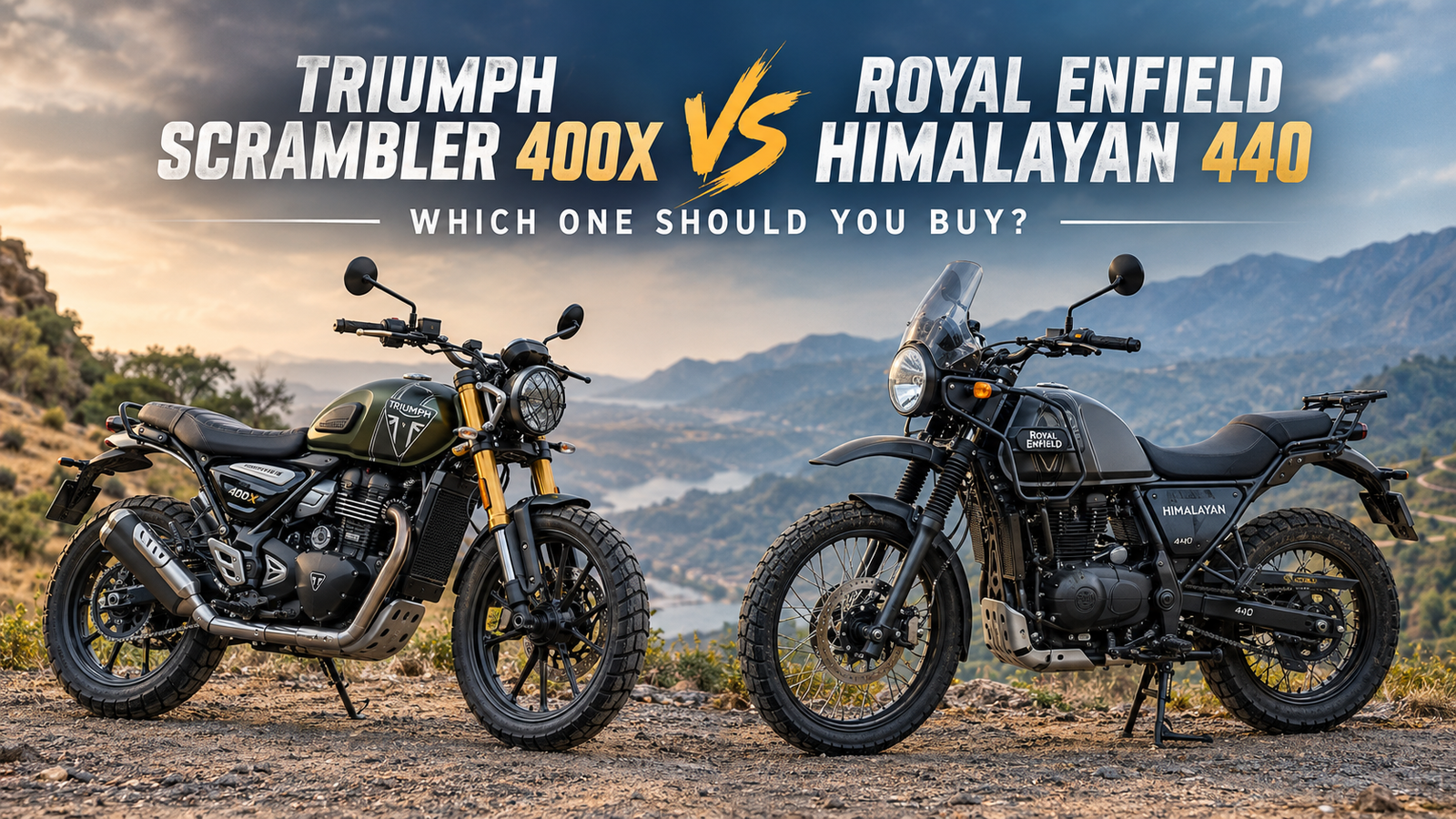
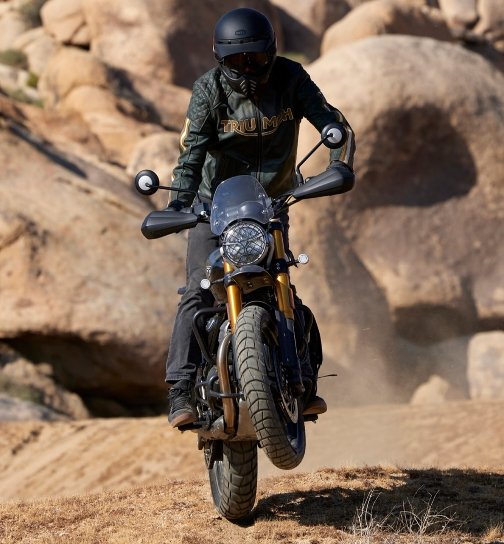
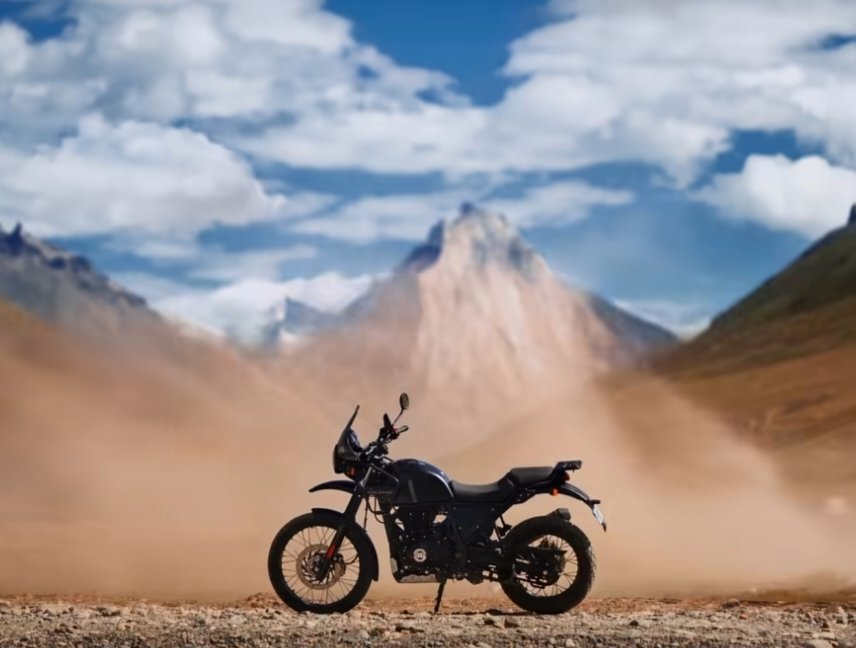
Royal Enfield has brought back the spirit of the OG Himalayan 411 in the form of the new Himalayan 440, powered by an updated 443cc engine. It also gets a 6th gear, which brings noticeably more refinement over the old 5-speed unit. Priced at ₹2,29,000 ex-showroom, it undercuts the Scrambler 400X — which starts at around ₹2,64,000 ex-showroom — by a healthy margin. But is it better than the Scrambler? Let’s find out.
Engine and Performance
The Indian-spec Scrambler 400X comes with a reduced-capacity 349cc engine, producing 37 bhp and 32 Nm of torque, while the Himalayan 440 makes 25.4 bhp and 34 Nm of torque. The Himalayan’s power figure is noticeably lower, but what it lacks there it makes up for with tractor-like low-end torque that helps it pull easily on inclines and in hilly terrain.
The new Himalayan is significantly better suited to touring than the old 411 and can sustain highway speeds of 110-120 kph effortlessly, without significant vibration. That said, the way it gets there is more linear and takes a bit longer, whereas the Scrambler 400X has more poke off the line and reaches that speed quicker.
Ergonomics and Seat Height
The Himalayan’s low 800 mm seat height is a real advantage over the Scrambler’s 835 mm, so shorter riders — under about 5’6″ — may find it harder to get both feet down on the Scrambler.
Weight and Ground Clearance
The Himalayan is also the heavier bike at 199 kg kerb weight against the Scrambler’s 185 kg. That 14 kg difference is offset somewhat by the Himalayan’s lower seat height, which makes it feel more manageable at a standstill despite the extra heft. Off the tarmac, the Himalayan’s 220 mm of ground clearance gives it a real edge over the Scrambler’s 195 mm, making it the more capable bike over rocks, ruts, and deep potholes.
Suspension
Here the story is much closer. The Scrambler has 150 mm of travel at both ends, while the Himalayan gets 200 mm up front and 180 mm at the rear. But the softer suspension tune on the Scrambler compensates for its shorter travel, narrowing the real-world gap.
Wheels and Tyres
This is probably the biggest differentiator between the two, and likely the deciding factor for a lot of buyers. The Himalayan’s 21-inch front wheel helps it glide over potholes, while the Scrambler’s 19-inch setup makes it noticeably more agile and easier to place through corners. But there’s a catch: tyre type.
Tubeless vs tube-type: The Himalayan comes with tube-type tyres, so punctures will always be at the back of your mind. The Scrambler, on the other hand, comes with a tubeless setup as standard, giving you real peace of mind on longer or more remote rides.
Brakes
The Scrambler gets a slightly bigger front disc at 320mm (against the Himalayan’s 300mm), with a 230mm rear disc versus the Himalayan’s 240mm. Both run dual-channel ABS, though the Himalayan lets you switch off rear ABS for loose surfaces — handy for the more off-road-focused rider.
Tech and Features
The Scrambler pulls ahead here: it comes with switchable traction control and a semi-digital instrument console. The Himalayan 440 keeps things deliberately simple, with an analogue-digital cluster and a separate Tripper navigation pod, but no TFT screen, riding modes, or traction control — in keeping with its back-to-basics positioning.
Fuel Tank and Range
The Himalayan’s 15-litre tank gives it an edge over the Scrambler’s 13-litre unit, which should translate to a longer range between fill-ups — a small but real plus for a touring-focused bike.
Riding and Pillion Comfort
The riding ergonomics on both bikes make them comfortable over long distances. Pillion comfort and legroom are also good on both, with the Scrambler’s softer suspension setup helping offset its shorter travel.
Fit and Finish
The fit and finish on the Scrambler 400X is top-notch — arguably the best in the 400cc segment, and a level the Himalayan doesn’t quite match. That said, the Himalayan’s black colourway looks great, and the new Grey with Khaki Green shade on the Scrambler is a genuine head-turner.
City Rideability
Both bikes are easy to manage in traffic. The Scrambler’s 19-inch front wheel gives it a slight edge in maneuverability, though the Himalayan’s low seat height keeps it plenty manageable too.
Headlight throw on both bikes is underwhelming, so no points to either there.
Verdict
If tube-type tyres on the Himalayan don’t bother you, it really comes down to how you like to ride — and how much you want to spend. The Himalayan 440, at ₹2.29 lakh, is the more affordable, leisurely tourer with better ground clearance and a simpler, back-to-basics character. The Scrambler 400X, at a roughly ₹35,000 premium, rewards you with more performance, sharper handling, tech like traction control, and better fit and finish if you want more poke and thrill on the way to your destination.




Leave a Reply