

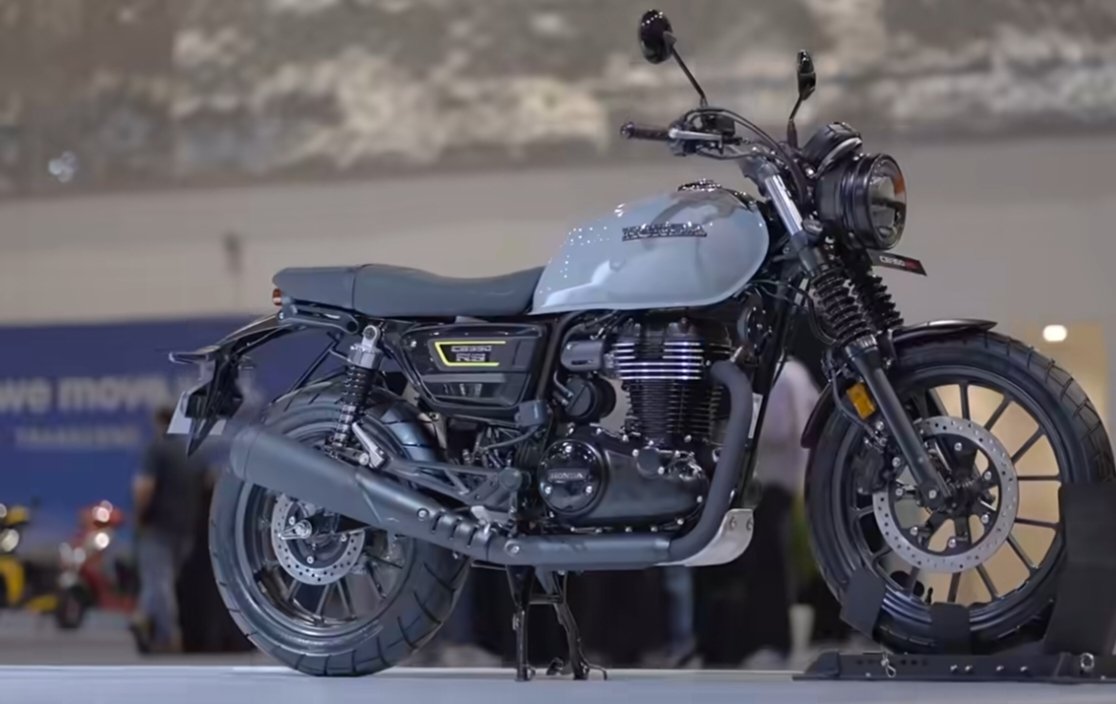
Honda has finally revealed the price of the CB500 in India, and at ₹2.75 lakh ex-showroom, the new 501cc single-cylinder motorcycle has landed in a very interesting place.
It is a price point that sits neatly below the Royal Enfield Interceptor 650 — and, perhaps more importantly, it brings back something India has been missing for years.
A big, relaxed, 500cc single.
Because when Royal Enfield stopped producing its 500cc single-cylinder motorcycles in 2020, it left behind a rather interesting gap in the Indian motorcycle market.
And Honda’s CB500 looks almost perfectly placed to fill it.
Remember the Royal Enfield 500?
For years, the Royal Enfield 500 was the motorcycle for riders who wanted something more substantial than the 350.
The Classic 500, Bullet 500 and Thunderbird 500 gave Indian riders a large-capacity single-cylinder motorcycle without making the jump to a twin-cylinder engine.
Then came BS6.
Royal Enfield announced that production of its 500cc UCE single-cylinder motorcycles would end in India, with the final Classic 500 Tribute Black marking the end of the line. Retail sales of the 500cc motorcycles in India were to end on March 31, 2020.
Royal Enfield itself described the 500cc motorcycles as having played an important role in establishing the middleweight segment in India.
And their disappearance created a very obvious gap.
In fact, when the 500cc platform was being discontinued, Autocar India specifically noted that it would create a gap in both price and performance between the 350cc single and 650cc parallel twins.
That gap has remained interesting ever since.
And now Honda has arrived
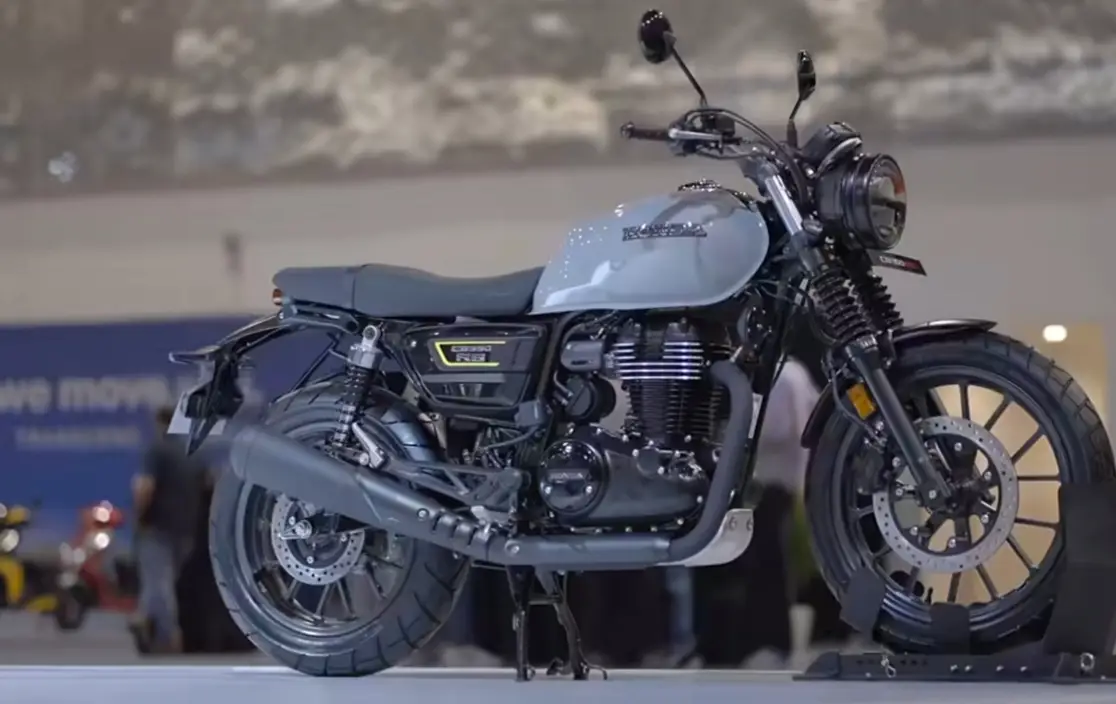
Enter the Honda CB500.
The motorcycle gets a 501cc air- and oil-cooled single-cylinder engine, producing 28 hp and 43.3 Nm.
And that torque figure is what catches my attention.
Because this isn’t Honda trying to make a 500cc single behave like a small sports bike.
It is a big single doing what big singles have traditionally done best:
low-end torque, relaxed power delivery and plenty of character.
That 43.3 Nm could be an absolute delight on the road.
You don’t necessarily need to wring its neck to make progress. You can simply roll on the throttle and let the engine pull.
And for everyday riding and touring, that kind of character can be far more enjoyable than chasing a big peak-power number.
Just below the Interceptor 650
This is where Honda’s pricing gets particularly interesting.
The CB500 starts at ₹2.75 lakh ex-showroom.
The Spoke version costs ₹2.99 lakh, while the Spoke with Stripes sits at ₹3.019 lakh.
So Honda has essentially placed the CB500 right around the ₹3 lakh motorcycle bracket.
And just above it sits the Royal Enfield Interceptor 650.
The Interceptor gives you a 648cc parallel-twin and substantially more outright performance.
The CB500 doesn’t attempt to compete with that.
Instead, it gives you something different.
A big single.
That makes the CB500 less of a direct Interceptor rival and more of an alternative for someone who wants something substantial without necessarily wanting a 650cc twin.
The missing middleweight
This is what I find most interesting about the CB500.
For a long time, the Indian market effectively had two choices if you wanted a classic, substantial motorcycle.
You could stay with something around 350cc.
Or you could jump to the 650cc class.
Royal Enfield’s 500 used to occupy the middle.
It was the motorcycle that said:
“I want more than a 350, but I don’t necessarily need a twin.”
The CB500 brings that philosophy back in a completely different package.
And perhaps that is why its relatively modest 28 hp figure doesn’t bother me much.
The motorcycle isn’t about winning a specification-sheet battle.
It is about the experience of riding a large single.
Honda’s fit and finish could make the difference
Then there is Honda itself.
The CB500 gets classic roadster proportions, a round headlamp, large tank and an overall design that doesn’t look overly complicated.
Honda has also added modern equipment such as Honda Selectable Torque Control, a slipper clutch and RoadSync connectivity.
But I think fit and finish could become one of the CB500’s biggest strengths.
If Honda gets the detailing, paint, switchgear, panel fit and overall refinement right, this could feel like a genuinely premium motorcycle.
And at around ₹3 lakh, that matters.
You want something that feels special even when you’re simply parked outside your house.
The big single is back — just not from Royal Enfield
There is something quite poetic about this.
Royal Enfield built much of its modern identity around the character of the big single, before eventually moving the 500cc platform out and pushing its 650cc twins as the natural upgrade.
Now Honda has walked into the space that was left behind.
Not with another 450.
Not with another 650.
But with a 501cc single-cylinder motorcycle.
That makes the CB500 particularly interesting.
The ThreeArc take
The Honda CB500 isn’t necessarily trying to be the most powerful motorcycle in its class.
It doesn’t need to be.
Its appeal lies somewhere else.
It brings back the idea of the big single to a market that lost its most famous 500cc single-cylinder motorcycle six years ago.
At ₹2.75 lakh, it sits below the Interceptor 650 and right around the ₹3 lakh sweet spot.
And with 43.3 Nm of torque, classic styling and Honda’s promise of modern refinement, it could be one of the most interesting additions to this part of the market.
The Royal Enfield 500 left a gap.
Honda may have just decided to fill it.
And that lovely low-end torque could be the best part of the story.
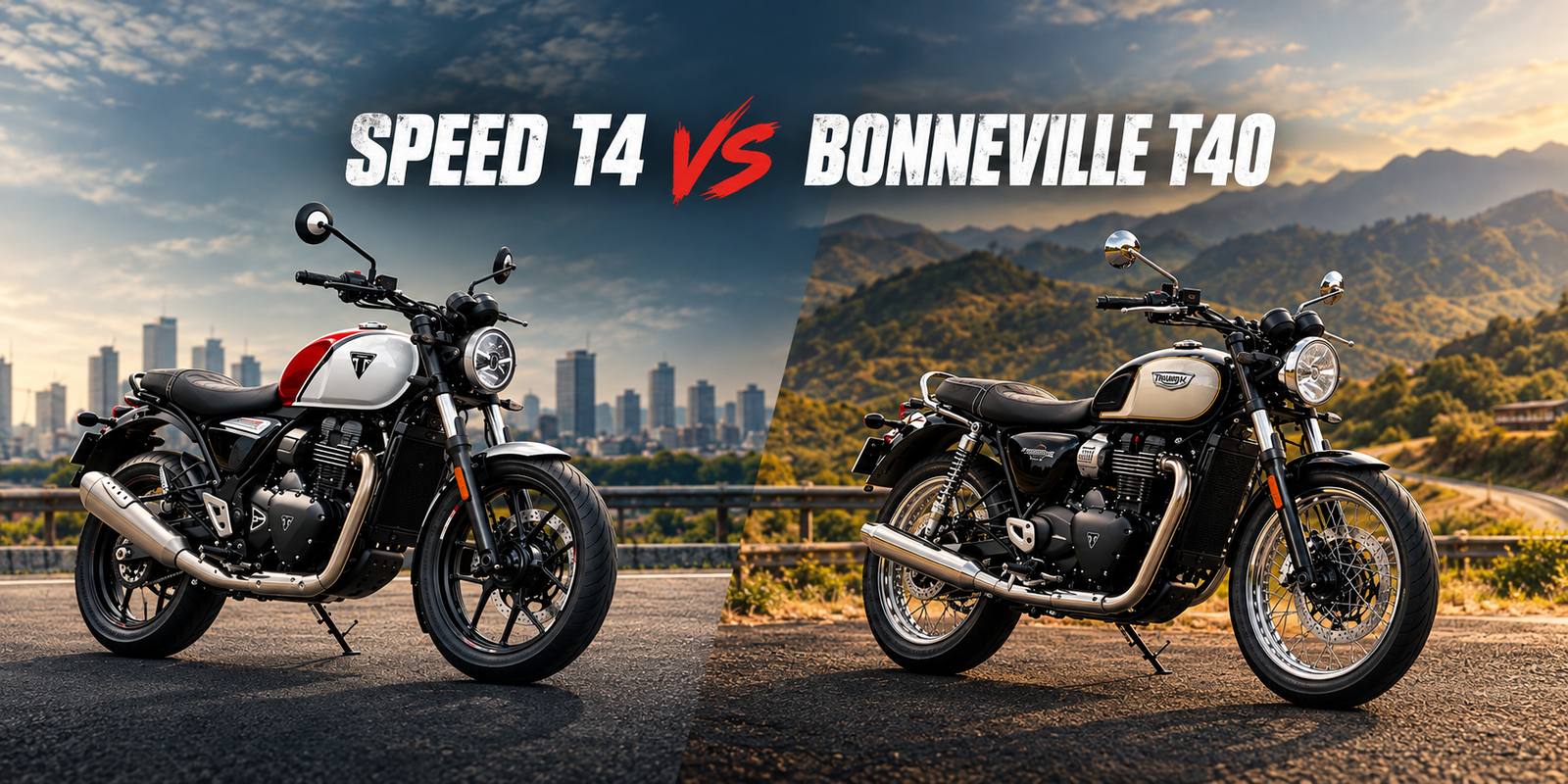
Honda CB 500 vs Triumph Bonneville T40
Both the Honda CB500 and the Triumph Bonneville T40 are in the ₹2.75–2.80 lakh ex-showroom bracket. So, which is the better bike?
I think the Triumph Bonneville T40 is a looker. I mean, that beautiful blue-and-orange colour combination, the stunning blacked-out version, the circular digital instrument cluster and the peashooter-style exhaust. The Bonnie is styled to the hilt.
But, but, but…
The Honda CB500 doesn’t lack in the looks department either, as its younger siblings in the CB350 range have already shown. So, it really comes down to one thing: simplicity.
Fewer complex electronic systems mean fewer things to worry about in the long run. And that is where Honda’s no-nonsense approach makes sense. The CB500 keeps things relatively simple, without an IMU or an elaborate suite of rider aids.
Then there’s the engine. The Honda delivers 43.3 Nm of torque, compared to the Bonneville T40’s 31.2 Nm. That’s a substantial difference on paper, even if the actual riding experience will depend on how each engine delivers that torque.
So, what’s it going to be? Honda’s mechanical simplicity and stronger torque, or Triumph’s classic styling and modern technology? The choice is yours.




Leave a Reply